
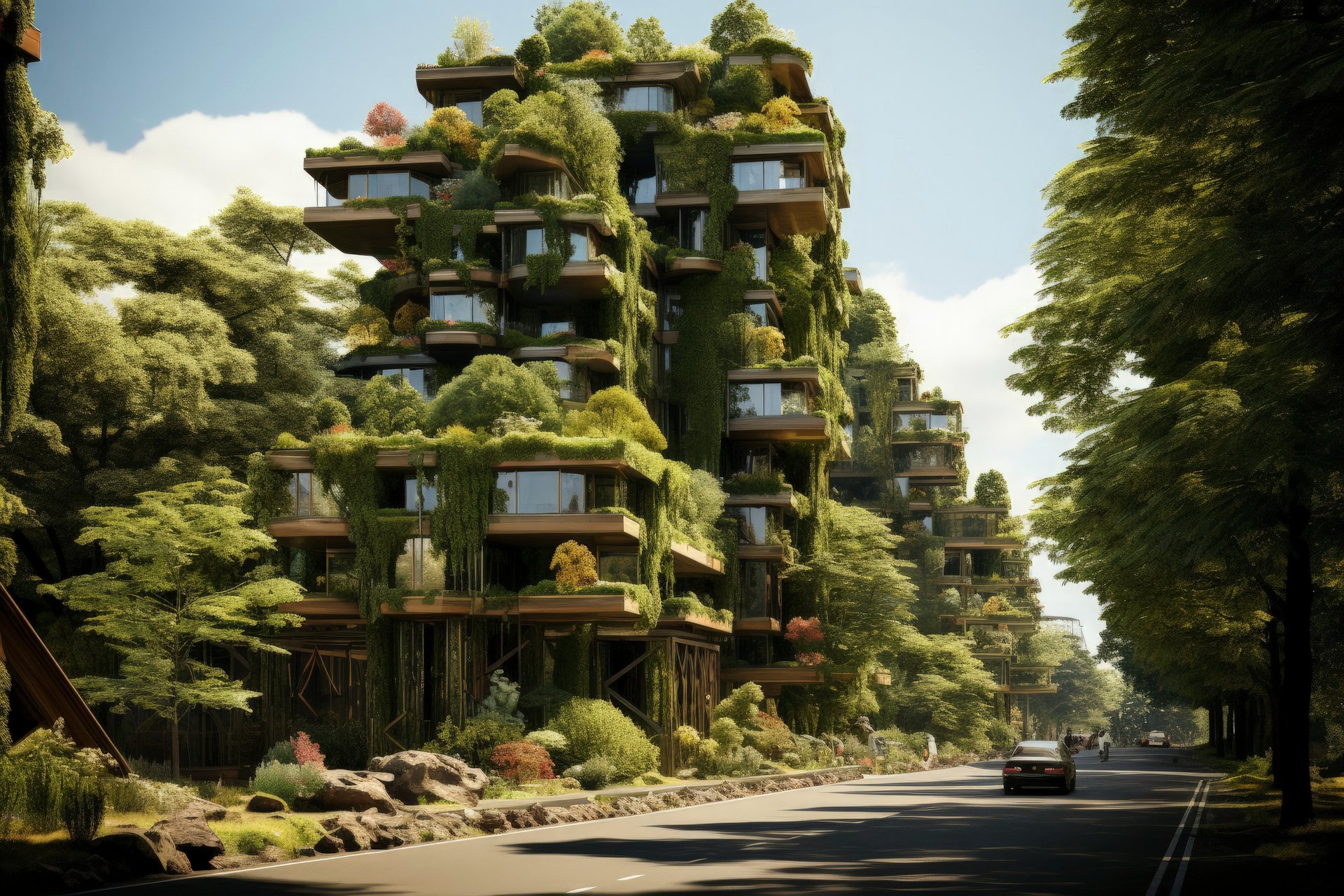
The Future of Construction: Hempcrete and Mass Timber
Here's your magazine... some more information,
ideas that might be of interest to you!
The construction sector is responsible for approximately 39% of global CO2 emissions. To make the building industry sustainable, technological innovation is rediscovering natural materials through two main solutions:
hempcrete and Mass Timber structures.
Hempcrete: Insulation and Carbon Sequestration
Hempcrete is a composite material made of hemp hurds (the woody core of the hemp stalk), lime, and water.
Carbon-negative footprint: The plant absorbs large amounts of CO2 during its growth, and the bio-brick permanently traps it within the structure.
Hygrothermal insulation: It regulates indoor humidity and maintains a constant temperature, reducing energy consumption and preventing mold growth.
Safety: The material is breathable, naturally fire-retardant, and pest-resistant.


Wood fiber insulation
To understand the utility of wood fiber, we must first understand how it works. This material is obtained from the processing waste of virgin wood, which is reduced into fibers, heated, and then pressed into panels or left loose for blowing insulation. The secret behind its insulating power lies in its porous cellular structure: the micro-cavities of air trapped inside the fibers actually block the passage of heat.
In winter, wood fiber retains heat inside the building, drastically reducing the need to turn on the heating. However, the real strength of this material emerges in summer, thanks to a physical property called "thermal lag". Thermal lag is the time it takes for the outdoor heat wave to penetrate inside the house. While synthetic and lightweight insulating materials accumulate heat and release it quickly, wood fiber boasts high density and a large thermal capacity. This means that the heat of the summer sun is absorbed by the panel during the day and released only many hours later; typically at night, when outdoor temperatures are cooler and we can ventilate the rooms. Put simply, the house stays cool in summer without massive use of air conditioning.
Another crucial aspect is breathability. Wood fiber is a "hygroscopic" material, meaning it is capable of absorbing excess moisture from the air and releasing it gradually when the environment becomes too dry. This mechanism allows the walls to breathe, eliminating the risk of condensation and the subsequent formation of mold. The result is a healthy indoor microclimate, with clean air and a humidity percentage that is always optimal for our respiratory health.
From the perspective of green building and ecology, wood fiber is an unbeatable material: it is completely renewable, recyclable, and biodegradable. During its life cycle, the tree it comes from absorbed CO₂ from the atmosphere, turning the insulation into an actual carbon sink. Furthermore, modern production processes are rigorously designed to minimize the ecological footprint, often using certified timber from sustainably
Finally, we must not overlook acoustic insulation. The density and fibrous structure of wood effectively dampen sound waves.


Pages
Home
Support
Blog
Servicies

© 2026 ArchEngi. An international platform in constant expansion.
Precision — borders dissolved
Pagine
Home
Support
Blog
Servicies
Contacts
info@archengi.com
International Platform
Architecture · Engineering
Pages